Le problème en une ligne : dans une grande partie de l’Afrique, un patient peut être soigné pour la mauvaise maladie pendant des mois ou des années, car les examens, les spécialistes et l’anatomopathologie qui confirment un diagnostic sont rares. L’Inde est devenue un lieu où les familles revérifient ce diagnostic, rapidement et pour un prix qu’elles peuvent prévoir.
The Gap Behind a Wrong Diagnosis
Un diagnostic n’est pas une décision unique. C’est une chaîne : un clinicien qui soupçonne la bonne cause, un examen capable de la prouver, un laboratoire qui le lit correctement et un spécialiste qui agit en conséquence. Dans de nombreux systèmes de santé africains, des maillons de cette chaîne manquent ou sont faibles.
The Lancet Commission on diagnostics estimated that between 35% and 62% of people in low- and middle-income countries have no access to the diagnostic resources needed for six common conditions, and that most of the unmet need is at community level (Ondoa et al., The Lancet, October 2021). That range covers all low- and middle-income countries, not only Africa.
- Africa, average1
- United States / United Kingdom55
Africa: about 1 pathologist per 1,000,000 people. US and UK: about 1 per 15,000–20,000, shown here as roughly 50–67 per million (midpoint 55). Source: Fleming K., 'Pathology and cancer in Africa', ecancer, 2019, citing Nelson et al., J Clin Oncol 2016. The 2016 survey used a convenience sample, so treat the figures as indicative.
The same review reports that about 80 pathologists a year graduate across sub-Saharan Africa, and that tissue diagnosis rates were about 80% in large cities but only about 40% in Niamey, Niger. It quotes the line that in a high-income country "it would be inconceivable to treat a tumour when its pathology is unknown" (ecancer).
What Gets Missed: Cases in the Press
The following cases come from published news reports. We name the outlet and date, and we leave out private individuals' names. They are the patients' and families' accounts as reported; we cannot verify the medical details.
| What was reported | Where | Outlet and date |
|---|---|---|
| A woman treated for migraine for months; later found to have a brain tumour that could no longer be operated on | Port Harcourt, Rivers State, Nigeria | News Agency of Nigeria, carried by Peoples Gazette, 18 Feb 2025 |
| Lab results read as an ulcer; appendicitis found only after it ruptured, and the patient died after surgery | Rivers State, Nigeria | Same report |
| A man treated for hypertension for three years, then diagnosed with Parkinson's disease by another consultant | Akwa Ibom State, Nigeria | Same report |
| A young man with kidney failure whose bone pain was long blamed on his bones; in India, doctors found over-active parathyroid glands as the cause | Kenya | The Standard (Kenya), undated, labelled eight years old when we read it |
| A woman who received two wrong diagnoses in two years before her sister took her to India | Kenya | The Standard (Kenya), same article |
The Nigerian report quotes a consultant at the University of Port Harcourt Teaching Hospital who blames quackery, inadequate training and weak regulation, and a laboratory scientist who points to overburdened hospitals and poor infrastructure. It gives no national misdiagnosis rate, and we do not claim one (lire le rapport).
Why this matters for you: a wrong diagnosis is not only a medical risk. Families in the Kenyan report said they spent over Sh1 million on treatment that did not help, against about Sh500,000 for the recheck and treatment in India. That is one family's account, not an average.
Why Rechecking Works
- The right test first. Une biopsie tissulaire, une IRM ou un bilan hormonal peuvent régler en quelques jours ce que des mois de traitement n’ont pas réglé.
- A second pair of eyes. Slides and scans can be re-read by a second specialist before any surgery or chemotherapy.
- Several specialists, one visit. Le patient kényan cité a vu un néphrologue, un orthopédiste et un chirurgien, avec imagerie, en un seul voyage.
- No treatment before proof. Where possible, treatment starts only once the pathology is known.


Où l’Inde a sa place, et où elle ne l’a pas
India received 644,387 foreign patients in 2024 from more than 100 countries, and Kenya alone sends more than 10,000 patients a year according to figures the Kenyan insurer NHIF gave The Standard. India also trains Kenyan doctors, and Kenyan insurers have agreements with Indian hospitals.
| Often the situation at home | Ce que les patients recherchent en Inde | |
|---|---|---|
| Diagnosis | Tests in few cities; long waits for reports | Imagerie, anatomopathologie et spécialistes dans un même hôpital |
| Second opinion | Hard to get; costly | Une consultation spécialisée à US$99 avec deux appels |
| Cost clarity | Paid out of pocket, bill grows as tests repeat | Un devis écrit avant de voyager |
| Language and support | Unclear who to trust | One named coordinator from first message to return |
Honest limits. L’Inde n’est pas la réponse à tous les cas. Certaines maladies se traitent bien chez soi. Nous le disons, et nous ne poussons jamais à la chirurgie. Une consultation vidéo et l’examen de vos dossiers viennent d’abord, et nous vous dirons si le voyage n’en vaut pas la peine.
Que faire si vous doutez d’un diagnostic
- 1Gather everything
Letters, scans (the images, not only the report), lab results and medicine lists.
- 2Ask for the slides or blocks
If you had a biopsy, ask the lab to release the slides or tissue block for a second read.
- 3Get a specialist review
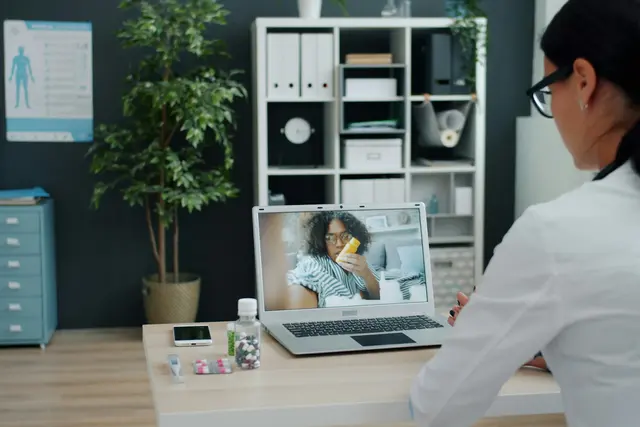
Une consultation vidéo coûte US$99 et comprend deux appels : un suivi ou un deuxième avis d’un autre médecin.
- 4Decide with a written estimate
Comparez le coût et le délai avec ce dont vous disposez chez vous avant de voyager.
Continue with comment un diagnostic est revérifié en Inde, étape par étape, and read traitements difficiles à trouver en Afrique et our Africa Patient Desk.
Vous envisagez un traitement en Inde ? Commencez par une consultation de spécialiste à $99. Un seul coordinateur vous accompagne de la première question jusqu'au retour chez vous en toute sécurité.
Recherche indépendante. Les chiffres proviennent des sources officielles et publiées citées ci-dessous, tels qu'ils étaient lors de notre vérification (octobre 2026). BookMedTrip est un facilitateur indépendant, sans lien avec les organismes publics, hôpitaux, associations ou organisations cités ici, et ne reçoit aucune commission de leur part. Si une information est dépassée ou inexacte, merci d'écrire à care@bookmedtrip.com et nous la corrigerons.
Questions
Is misdiagnosis common in Africa?
No single national rate exists in the sources we found. What is documented is limited access to diagnostics and pathology, and press reports of wrong or delayed diagnoses.
Can I get a second opinion without travelling?
Oui. Envoyez vos dossiers et imageries pour une consultation spécialisée à US$99 avec deux appels avant de décider de voyager.
L’Inde est-elle toujours la réponse ?
No. We tell you honestly when treatment at home or nearby is the better choice.